

INDIA



Capital
New Delhi
Population
1,336 billion (2019)
Area
3.287.263 km²
President
Ram Nath Kovind
Prime Minister
Narendra Modi
MOFA
Sushma Swaraj
Currency
Hint Rupisi
GDP
2,650,725 trilyon Dolar (2019)
Spoken Languages
Over 200 local languages are spoken in India, and 22 different languages are recognized as official languages in the Indian Constitution.
English and Hindi are used in official correspondence.
Urdu, Marathi, Malayalam, Tamil, Bengali, Telugu, Kannada, Kashmiri, Gujarati, Punjabi, Assamese are among major spoken languages in the country.
Ethnic Structure
72% Indo-Aryan, 25% Dravidian, 3% other
Notable Political Parties
Political parties with three or more seats in the Parliament of India are listed.
Bharatiya Janata Party (BJP)
Indian National Congress (INC)
All India Anna Dravida Munnetra kazhagam (AIADMK)
All India Trinamool Congress (AITC)
Biju Janata Dal (BJD’s)
Shiv Sena (SS)
Telugu Desam Party (TDP)
Telangana Rashtra Party (TRP)
Communist Party of India (Marxist) (CPI(M))
Yuvajana Sramika Rythu Congress Party (TSRCP)
Lok Janshakti Party (LJP)
National Congress Party (NCP)
Samajwadi Party (SP)
Aam Admi Party (AAP)
Shiromani Akali Dal (SAD)
Rashtriya Janata Dal (RJD)
International Organizations of Witch It Is A Member
Asian-African Legal Consultative Organization (AALCO), Asia Cooperation Dialogue (ACD), Asian Development Bank (ADB), African Development Bank (AfDB) (non-regional member), Association of Southeast Asian Nations (ASEAN) (dialogue partner), ASEAN Regional Forum (ARF), Australia Group (AG) Bay of Bengal Initiative for Multi-Sectoral Technical and Economic Cooperation (BIMSTEC),
Bank for International Settlements (BIS), BRICS (Brazil, Russia, India, China and The Republic of South Africa), Commonwealth (Commonwealth), Conference on Disarmament (CD), European Nuclear Research Center (CERN) (observer) Conference on Interaction and Confidence Building Measures in Asia (CICA), Colombo Plan (CP), East Asian summit (EAS), United Nations Food and Agriculture Organization (FAO),
Financial Action Task Force (FATF), G-15, G-20, g-24, G-77, International Atomic Energy Agency (IAEA), International Bank for Reconstruction and Development (IBRD), International Civil Aviation Organization (ICAO), International Chamber of Commerce (ICC) (National Committees), International Red Cross and Red Crescent Movement (ICRM), International Development Association (IDA), International Fund for Agricultural Development (IFAD), International Finance Corporation (IFC) International Federation of Red Cross and Red Crescent Societies (IFRC),
International Hydrographic Organization (IHO), International Labour Organization (ILO), International Monetary Fund (IMF), International Maritime Organization (IMO), International Mobile Satellite Organization (IMSO), International Criminal Police Organization (Interpol), Intergovernmental Oceanographic Commission (IOC), International Organisation for Migration (IOM), Inter-Parliamentary Union (IPU), International Organization for Standardization (ISO), International Telecommunications Satellite Organization (ITSO), International Telecommunication Union (ITU) International Trade Union Confederation (ITUC) (NGOs), Arab League (LAS) (Observer), Multilateral Investment Guarantee Agency (MIGA),
United Nations Organization Stabilization Mission in the Democratic Republic of Congo (MONUSCO), Missile Technology Control Regime (MTCR), Non-Aligned Movement (NAM), Organization of American States (OAS) (observer), Organization for Economic Cooperation and Development (OECD), Organization for the Prohibition of Chemical Weapons (OPCW), Permanent Court of Arbitration (PCA), Pacific Islands Forum (PIF) (partner), South Asian Association for Regional Cooperation (SAARC),
South Asia Co-operative Environment Programme (SACEP), Shanghai Cooperation Organization (SCO), United Nations (UN), United Nations Conference on Trade and Development (UNCTAD), United Nations Disengagement Observer Force (in the Golan Heights) (UNDOF), United Nations Educational Scientific and Cultural Organization (UNESCO), United Nations High Commissioner for Refugees (UNHCR), United Nations Industrial Development Organization (UNIDO), United Nations Interim Task Force in Lebanon (UNIFIL), United Nations Interim Security Force for Abyei (UNISFA),United Nations Institute for Training and Research (UNITAR), United Nations Mission in Ethiopia and Eritrea (UNMEE),
United Nations Mission in South Sudan (UNMISS), United Nations Mission in Ivory Coast (UNOCI), United Nations Security Council (UNSC) (interim) (1950 – 1951, 1967 – 1968, 1972 – 1973, 1977 – 1978, 1984 – 1985, 1991 – 1992, 2011 – 2012), United Nations World Tourism Organization (UNWTO), Universal Postal Union (UPU), World Customs Organization (WCO), World Federation of Trade Unions (WFTU) (NGOs), World Health Organization (WHO), World Intellectual Property Organization (WIPO), World Meteorological Organization (WMO), World Trade Organization (WTO)
Geographical Location
India is located in South Asia and borders the Indian Ocean to the south, Pakistan to the west, China, Bhutan and Nepal to the north, and Bangladesh and Myanmar to the east.
It is the seventh largest state in the world in terms of area. The climate in the north is mild, while the tropical monsoon climate prevails in the south. The southern and central parts of India consist of plateaus, while the deserts are located in the west and the Himalayan Mountains in the north
Political and Administrative Structure
The federal republic is the form of government of the Republic of India, which gained independence from the United Kingdom on August 15, 1947. India consists of 29 states and 7 union territories.
The legal infrastructure of India is based on the 1950 constitution and English law.
India has a parliamentary form of government. Although the president is the head and leader of the country, the main administrative powers are vested in the prime minister, who is elected to represent the people.
There are many political parties in India, including local, regional and national.
States: Andhra Pradesh, Arunachal Pradesh, Assam, Bihar, Chhattisgarh, Goa, Gujarat, Haryana,
Himachal Pradesh, Jammu and Kashmir, Jharkhand, Karnataka, Kerala, Madhya Pradesh, Maharashtra,
Manipur, Meghalaya, Mizoram, Nagaland, Orissa, PunJab, Rajasthan, Sikkim, Tamil Nadu, Telangana,
Tripura, Uttar Pradesh, Uttarakhand, West Bengal.
Union Territories: Andaman and Nicobar Islands, Chandigarh, Dadra and Nagar Haveli, Daman and Diu, Delhi, Lakshadweep and Puducherry
Other Important Cities
Agra, Chandigarh, Jaypur, Ahmedabad, Chennai, Bombay, Bangalore, Pune, Kolkata, Hyderabad.
Population and Labor Force Structure
Population growth rate between 2000-2007 in India, whose population reached 1.34 billion people in 2018, was realized at an annual rate of 1.5%. This ratio remained approximately the same in 2009 and 2010.
The population growth rate in 2017 was 1.14%. This ratio was 1.9% in the 90s, 2.1% in the 80s and 2.3% in the 60s. Despite optimistic expectations that the birth rate will decrease, İt is estimated that the population of India will reach 1.4 billion in 2025.
The life expectancy increased to 66.9 for men and 69.9 for women in 2015. The life expectancy for men and women was 32 years in 1951. The rate of living in rural areas is very high compared to other developing Asian countries. 66.9% of the population lives in rural settlements. İn spite of that, migration to cities is increasing rapidly. About 10 million people join the labor force every year in India. This situation indicates that the government needs to invest to increase the quality and quantity of education.

Natural Resources and Environment
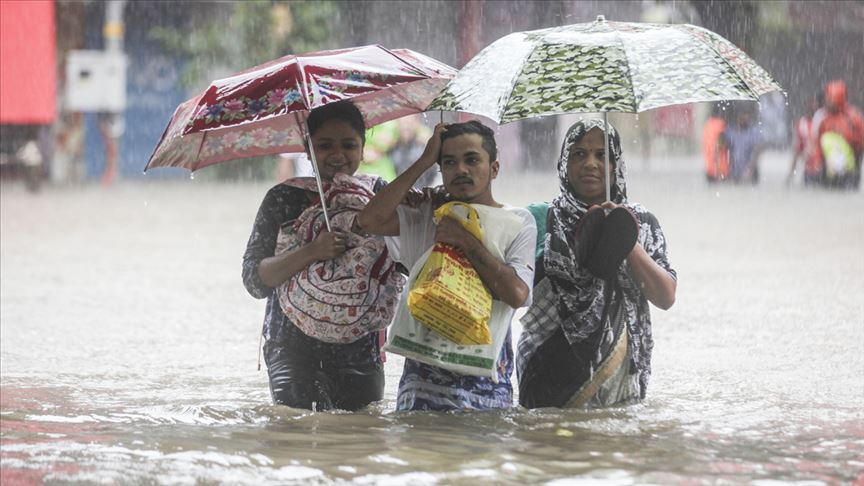
India is not a very rich country in terms of natural resources. Despite the fact that India occupies 2.4% of the earth’s surface, it accomodates about 18% of the world’s population. Therefore the need for natural resources is high. The most essential mines in India are coal, iron and bauxite. The vast majority of oil and gas is imported. Large geographical and climatic differences are one of the reasons for the differences in income distribution and economic development between regions. In contrast to developed countries, about 50% of the working population is employed in the agricultural sector. Although migration has increased, it is still limited, and the livelihood of the vast majority of Indians depends on the land. About 40% of the arable land is irrigable, and agricultural production on the remaining lands is dependent on annual monsoon rains.
Economic Structure
The Indian economy has two different structures. On the one hand, there is a modern and globally competitive information-based services sector that employs the smartest people in the middle class, and on the other hand, there is agricultural sector which mostly employs a low-educated labor force and of which yield is dependent on rainfall. Although the manufacturing sector has traditionally been inadequate due to poor-quality goods, this situation has begun to change in recent years. As a result of the strong growth in the services sector, while the share of the sector in GDP was 58.90% in 2015, the share of the agricultural sector was 16.6% and the share of industry was 24.50%. Even though the dependence of the economy on agriculture has decreased in recent years, fluctuations in GDP still depend on the consequences of monsoon rains. The majority of landowners can only farm enough to earn a living, and most farming families live below the poverty line. India has some of the worst human development indexes in the world, especially in rural areas. In spite of that, India also has a large number of highly qualified labor force and several international industrial groups
Ethnic Status
National population surveys in India, where 2000 ethnic groups live, use the expressions caste and tribe instead of ethnic group. There are more than 500 tribes and castes recognized by the constitution of India. The castes recognized by the constitution constitute 16.2% of the total population, while the recognized tribes constitute 8.2%. The terms Indo-Aryan, Dravidian, Tibetan-Burman and Austro-Asiatic, which are often used, are not ethnic designations, but language group names and characterize groups of people who speak these languages.
72% Indo-Aryan, 25% Dravidian, 3% other
Language
India is a country where a lot of languages and dialectics are spoken as a result of cultural diversity. The Constitution of India has recognized 22 of these languages. Some of these languages are; Bangla, Gujarati, Hindi, Kannada, Malayalam, Marathi, Oriya, Punjabi, Sanskrit, Tamil, Telegu and Urdu. The official language is Hindi. English is the common language used by business circles.
Religion
India is a secular country, and all religions are equal before the law. The major religions that exist in India are Hinduism, Islam, Christianity, Sikhism, Buddhism, Jainism, Judaism and Zoroastrianism. 80.5% of the population of India belong to the religion of Hinduism. Muslims constitute 13.40% of the population, while Christians constitute 2.30% and those belong to the Sikh religion constitute 1.90%.

Cultural and Social Life
India, the second most populous country in the world, has a rich culture of about 5000 years. The “Bharata Varsha” of ancient age, in other words, the land of the legendary king Bharat, India has incorporated different traditions, ethnic groups, languages, beliefs, tastes and branches of art; presented them to the whole world and managed to influence other communities for centuries. The protection of the identities of various ethnic and religious groups, castes and tribes in the country, whose freedoms are guaranteed by the constitution, has made the country a cradle of civilizations rather than a nation-state.
According to the 2015 figures, there are over one million schools in India, where the literacy rate is 80%. There are 300 universities in the country. There are both public and private schools in urban centers, while mainly public schools exist in rural areas. India has universities and vocational schools. The universities and vocational schools in India graduate about half a million students every year, and make a great contribution to the English-speaking educated labor force in the country.
Indian clothing has recognition on a global scale. Indian dishes have an important place in world cuisine, and cinnamon and curry sauce, which is indispensable for world cuisine, is a gift of Indian cuisine. Indian dishes are like an extension of the rich vegetation of south Asian nature, and spices with very different flavors form the basis of Indian cuisine in which chicken is frequently used. Because it is sacred, cow meat is not used in Indian dishes.
Indian Cultures and Indian Food
Indian clothing has recognition on a global scale. Indian dishes have an important place in world cuisine, and cinnamon and curry sauce, which is indispensable for world cuisine, is a gift of Indian cuisine. Indian dishes are like an extension of the rich vegetation of south Asian nature, and spices with very different flavors form the basis of Indian cuisine in which chicken is frequently used. Because it is sacred, cow meat is not used in Indian dishes.
1- Washing away Sins in the Ganges River
The Ganges river is of great importance to the Hindus. They recognize the Ganges River as the Goddess Ganga and think that when they bathe in this river, they will wash away their sins. They also believe that the souls of their dead are liberated when they burn their dead on the banks of the Ganges River and throw their ashes into the river
2- Cows are sacred to Hindus
According to Hindus, cows are sacred animals. Such that from the outside we believe that they worship cows. As a matter of fact, they think that their God, whom they call Krishna, came to existence in cow’s body. Therefore, they never harm cows and do not eat their meat
3- Suicide Is an Appreciated Issue
One of the interesting traditions in India is that suicide is not considered a sin or even an appreciated act. First, the person who is going to commit suicide fasts for 3 days. How they want to commit suicide afterwards, drowning in water, starving, thrown into a fire, sitting in front of the train, etc., they choose and fulfill their wish.
4- Women can be polygamous
Until the British occupation in India, women could have more than one husband. Mostly, the brothers would marry the same woman. Although this tradition is not seen much today, it can be found in remote corners of India.

5- Marrying Girls to Dogs
Yes, you have not misread it. In India, girls over the age of seven are married to a dog. In this way, it is believed that the girl will be protected by the dog until she gets married.

6- The Tradition of Dowry
Dowry is a tradition that is the exactly opposite of bride price in our country. When getting married in India, the girl’s side, not the boy’s, pays the boy’s family. That is why families do not desire to have daughters.

7- The Tradition of Snake Charming
The snake charming business commenced by poor people in India to earn money has become a symbol and a tradition of India after a while. In almost every corner of India you can see an Indian snake charmer.

8- Sati Tradition
Another creepy and mind-blowing tradition in India is the so-called Sati tradition. According to this tradition, women who are widowed after their husbands die are poured gasoline and burned either by themselves or by someone else. In this way, it is thought that the woman gets rid of her sins and goes to her husband.

9- Marriage of Frogs
Here is another one of India’s ridiculous traditions: the marriage of frogs. It is said that they performed this ceremony at the request of the Rain God.

10- Holi Festival
The craziest and most fun of the traditional festivals of India is undoubtedly the Holi Festival. In this festival, everyone throws colorful paints at each other and has fun to repletion, regardless of young or old. With this festival, Indians celebrate the arrival of spring and aim to entertain especially the elderly and relieve them of loneliness and spring fatigue.

11- Baby Tossing
Such a tradition certainly does not exist anywhere in the world. It is thought that children will be healthier with the tradition of throwing them from a height, which is especially practiced in the Muslim section.

12- The Tradition of Flying a Kite
One of the most famous traditions of India is the Kite Festival, which is celebrated as a farewell to winter. During this period, everywhere is a holiday, and people go up to the roofs of their houses, fly kites, sing songs and dance.
